A day here
Every block is a choice. The only thing everyone does is clean up.
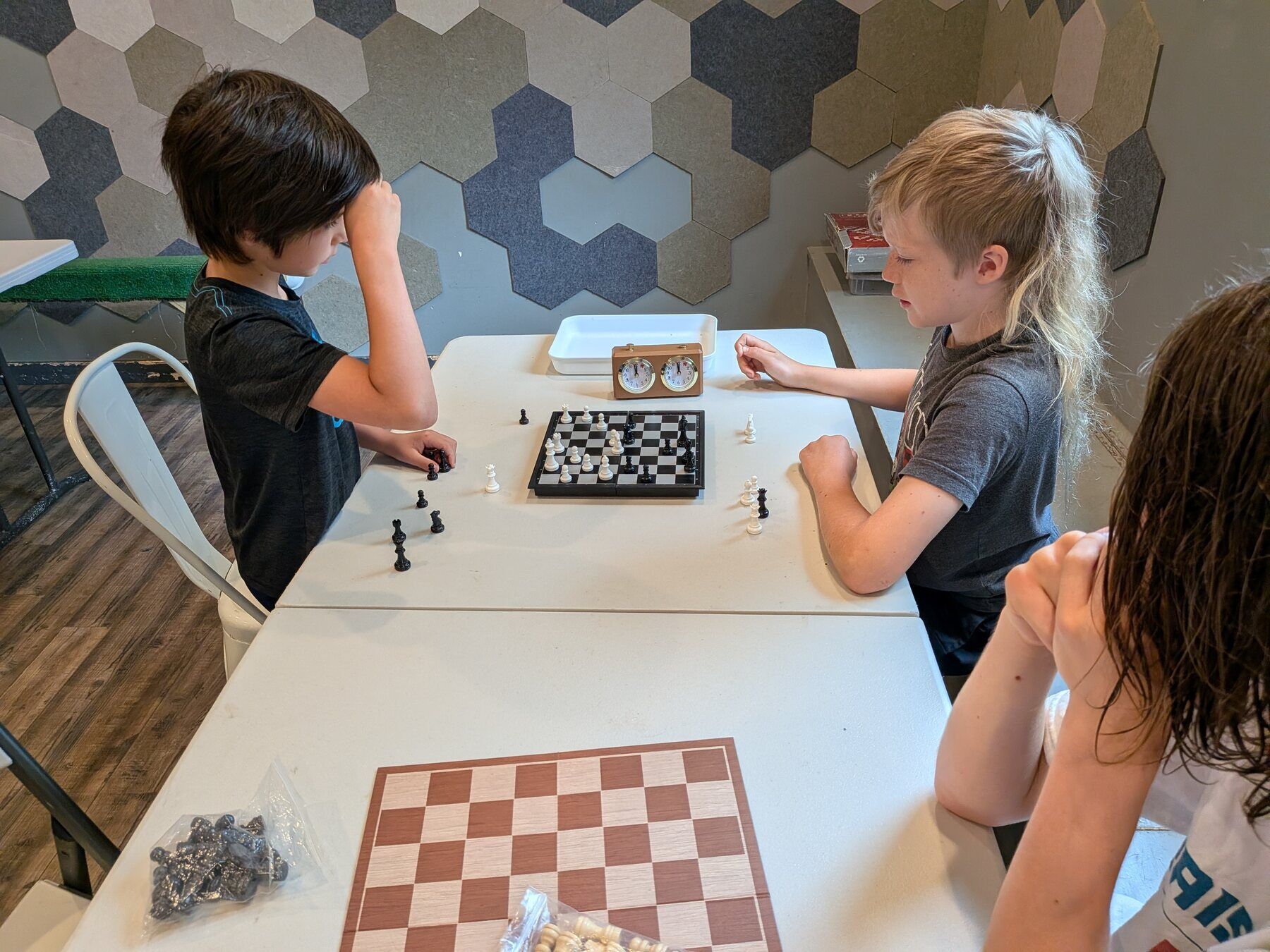
A day here has a shape, but kids decide what goes in it. Offerings are planned from what kids have asked for, and a kid who doesn’t want one has the play yard instead.
Some offerings are drop-in: kids decide each day whether to join. Others are commitments: kids sign up and stick with them for the whole session. As kids get older, more of their offerings tend to be commitments.
A typical day
- Arrive. Put things away and ease into the day. Kids think about what they want from it, and check in with a facilitator if they need help setting up something that involves other people.
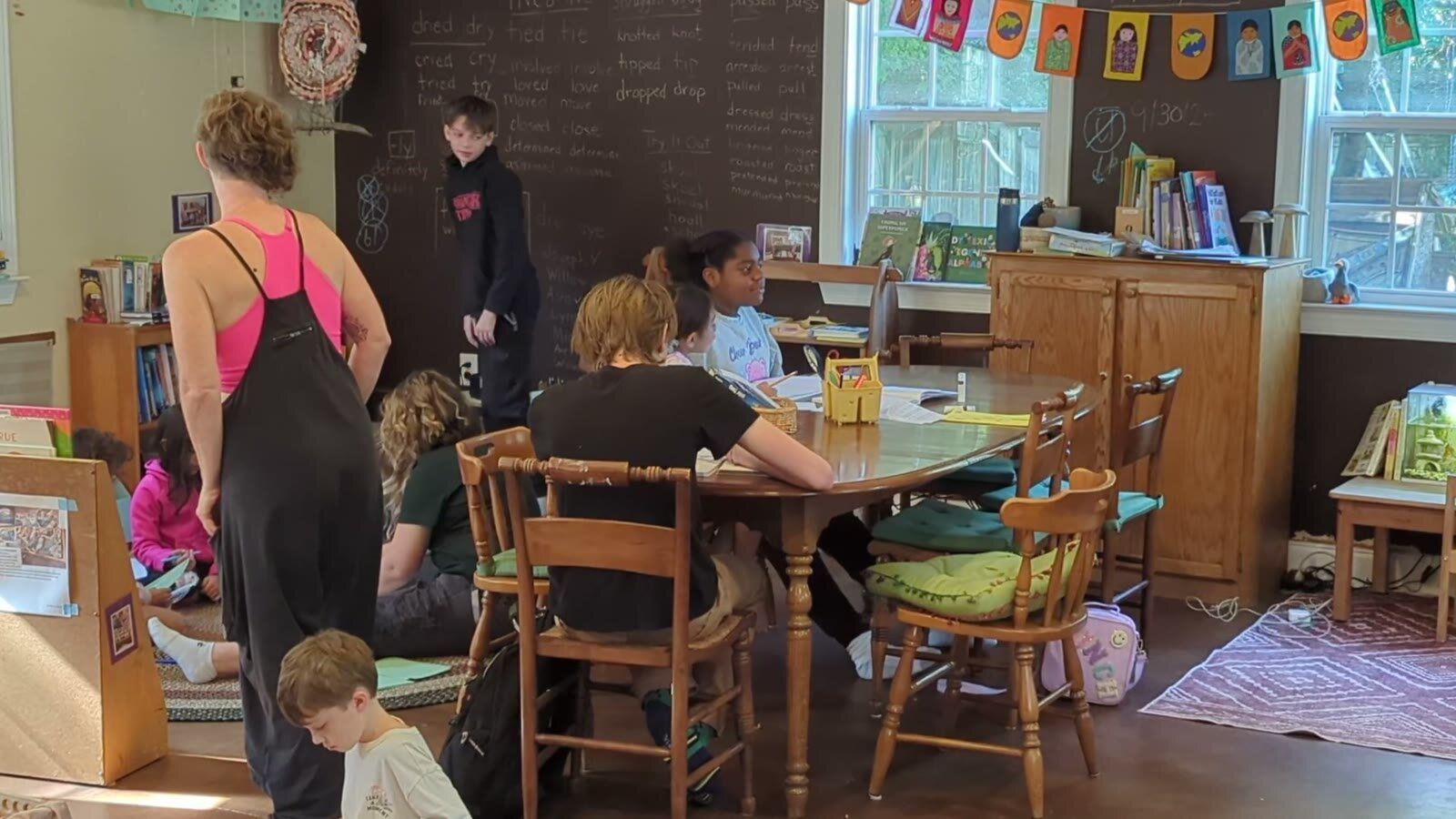
- Morning circle. Each group gathers to check in, hear announcements and review the day’s offerings.
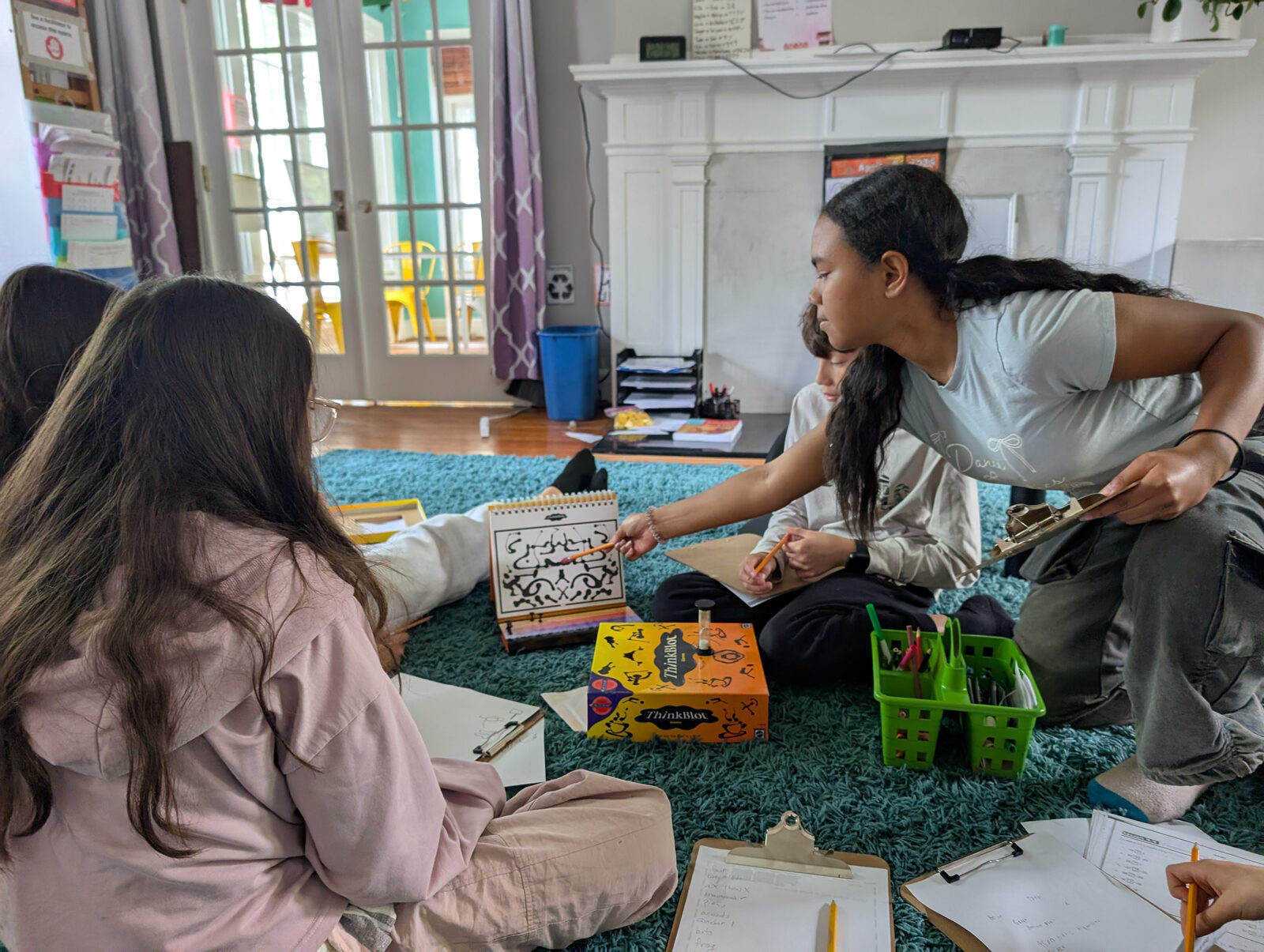
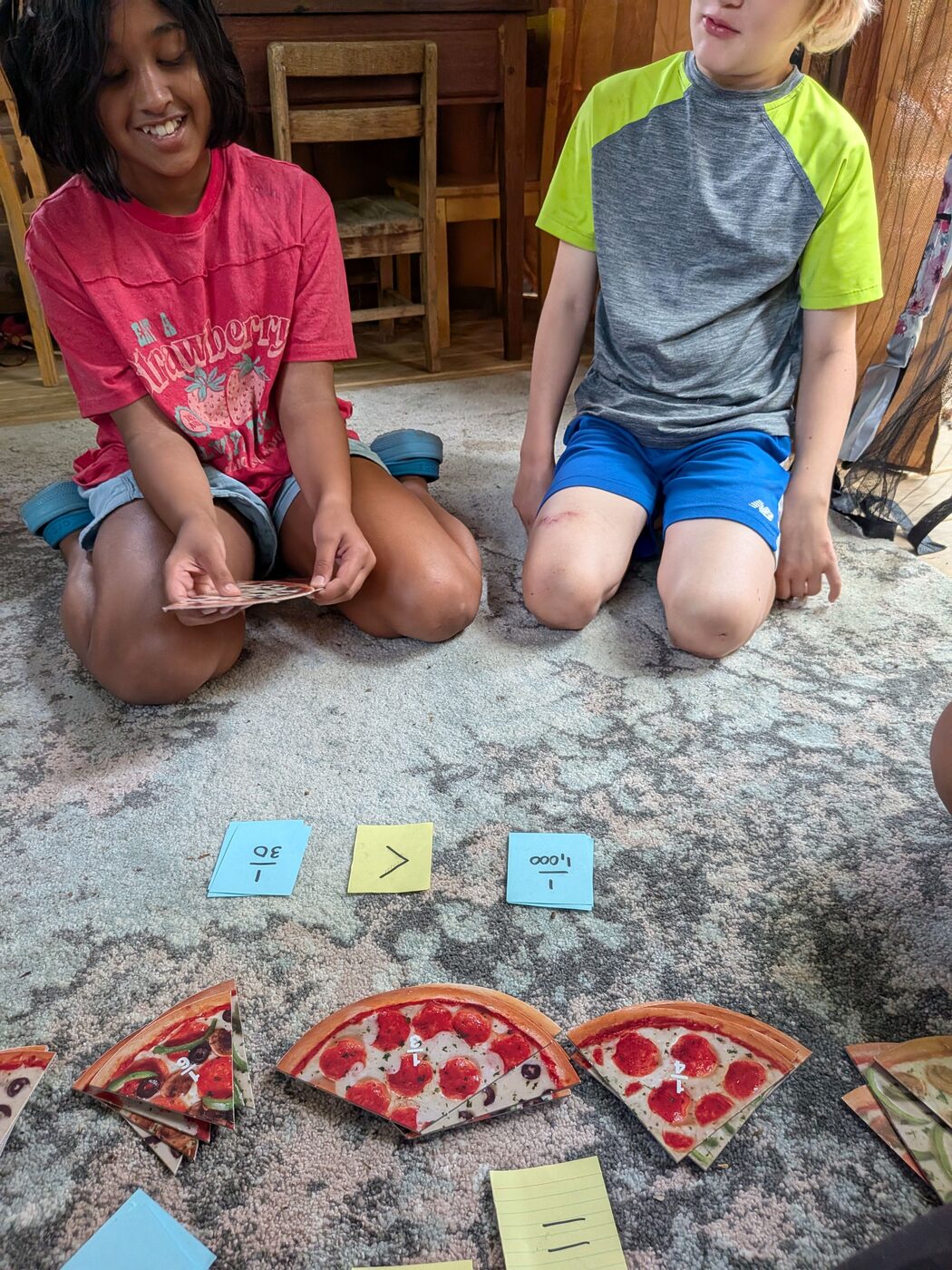
- Offering block one. Several offerings to choose from in the schoolhouse, each planned from interests kids have shared.
- Offering block two. The same again. A kid in the middle of their own project, like a book they want to finish or an art piece, can have a space to work on it instead.
- Lunch. Kids bring their own lunch and snacks, ideally things they can prepare and clean up on their own. They can eat whenever they’re hungry, but this is when everyone stops to eat together.
- Afternoon. Three more blocks: more offerings, free play outside, quiet indoor activities, and open art whenever an adult can be there with it.
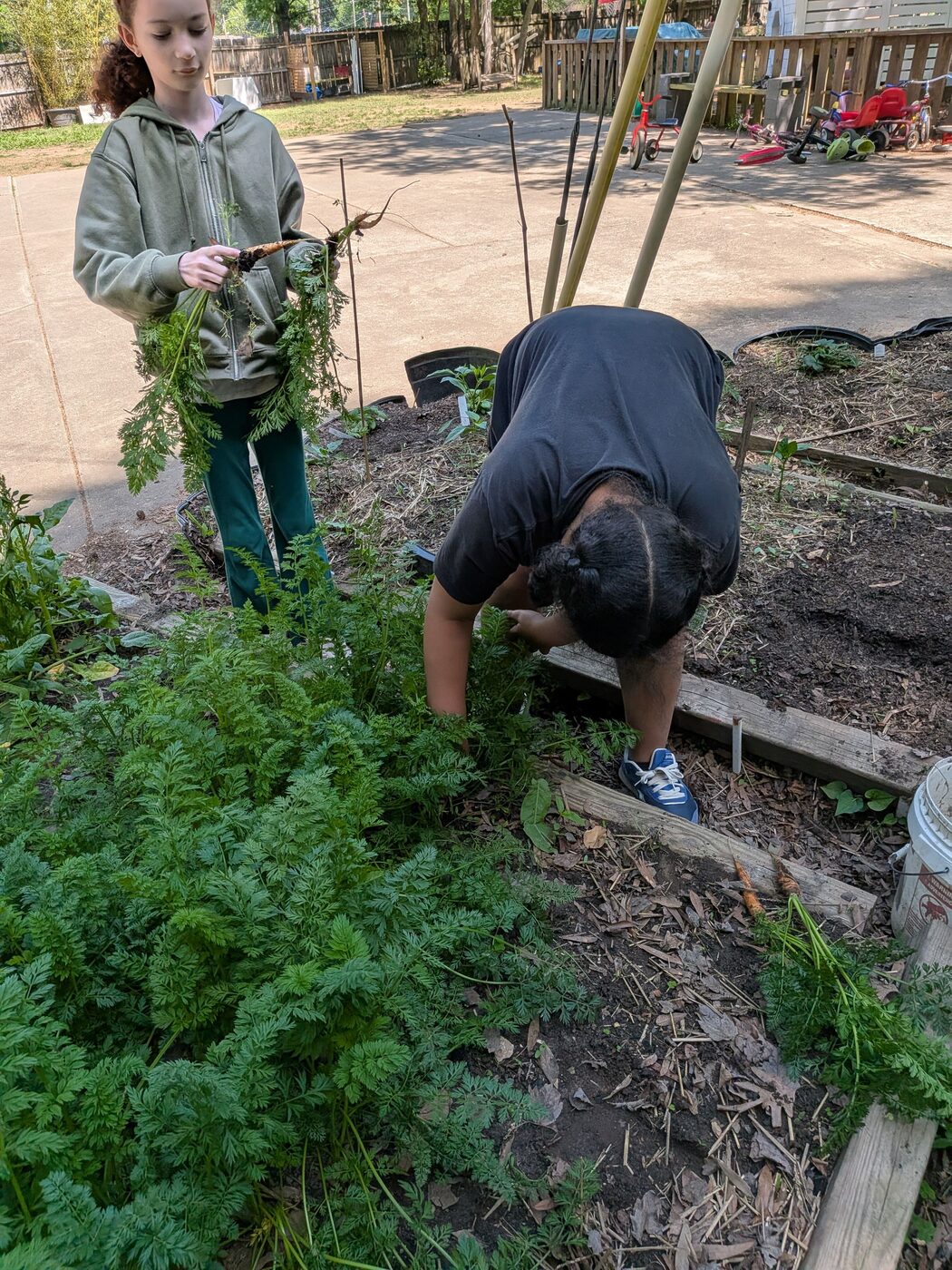
- Community care. An end-of-day check-in outside, then everyone, big and small, cleans something up. Each kid has a regular job that suits them, like wiping, sweeping, organizing or putting the balls away, and can switch when they need to.
- Snack and pickup. An optional shared snack in the play yard while families arrive. Pickup is by 3:30.
If a kid doesn’t want an offering
That’s fine. In the morning, kids who aren’t in an offering spend their time in the play yard or the indoor spaces next to it, where facilitators run looser, more spontaneous activities. In the afternoon, free play opens up indoors too. We want the day to work as well for a kid who likes a plan as for a kid who’d rather follow what catches their attention.
For the youngest kids, the block schedule mostly happens around them. Few of them keep track of it, and they don’t need to: invitations set out around the play yard and spontaneous play are the heart of their day. Most of them still have an offering or two each week that they look forward to.
What kids want feeds the next days: a new offering, a trip someone wants to plan, or a time to sit down about a conflict. Kids raise it in morning circle, in Connection Circle, or with a facilitator any time.

Thursdays and Fridays
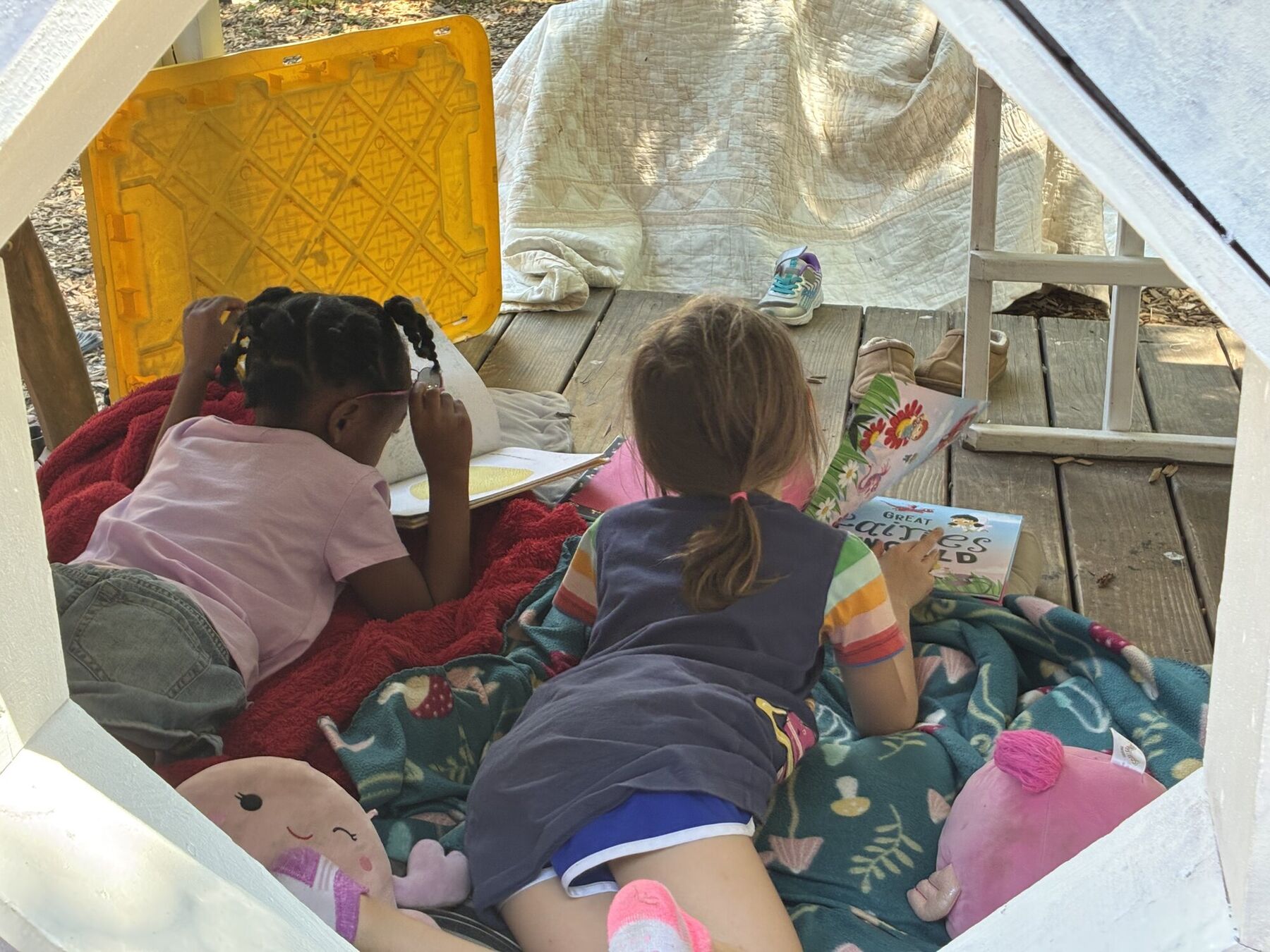
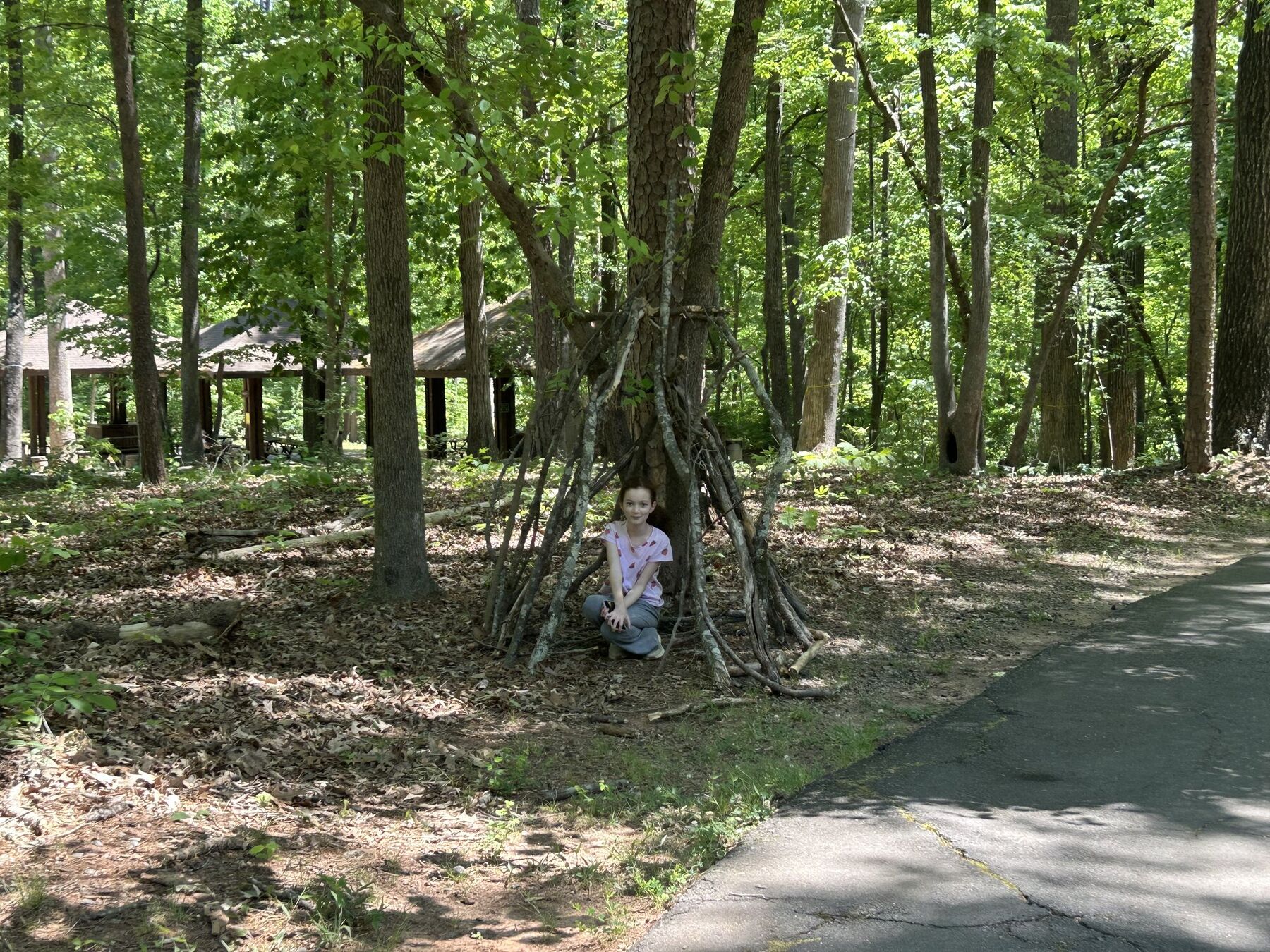
On Thursdays, Roots heads out for forest days and field trips: hiking, woods play, nature journals, insects and mess, at parks and places around Charlotte. Saplings stay on campus and get more room in the play yard. In the schoolhouse, Canopy and Acorns have offerings, which run Monday through Thursday.
Fridays are Park Day, or ALC Wilds, our sports group for kids 10 and up.
The four groups
Groups are loose, and which one a kid belongs to depends on the kid and their readiness, not a birthday.
- Roots
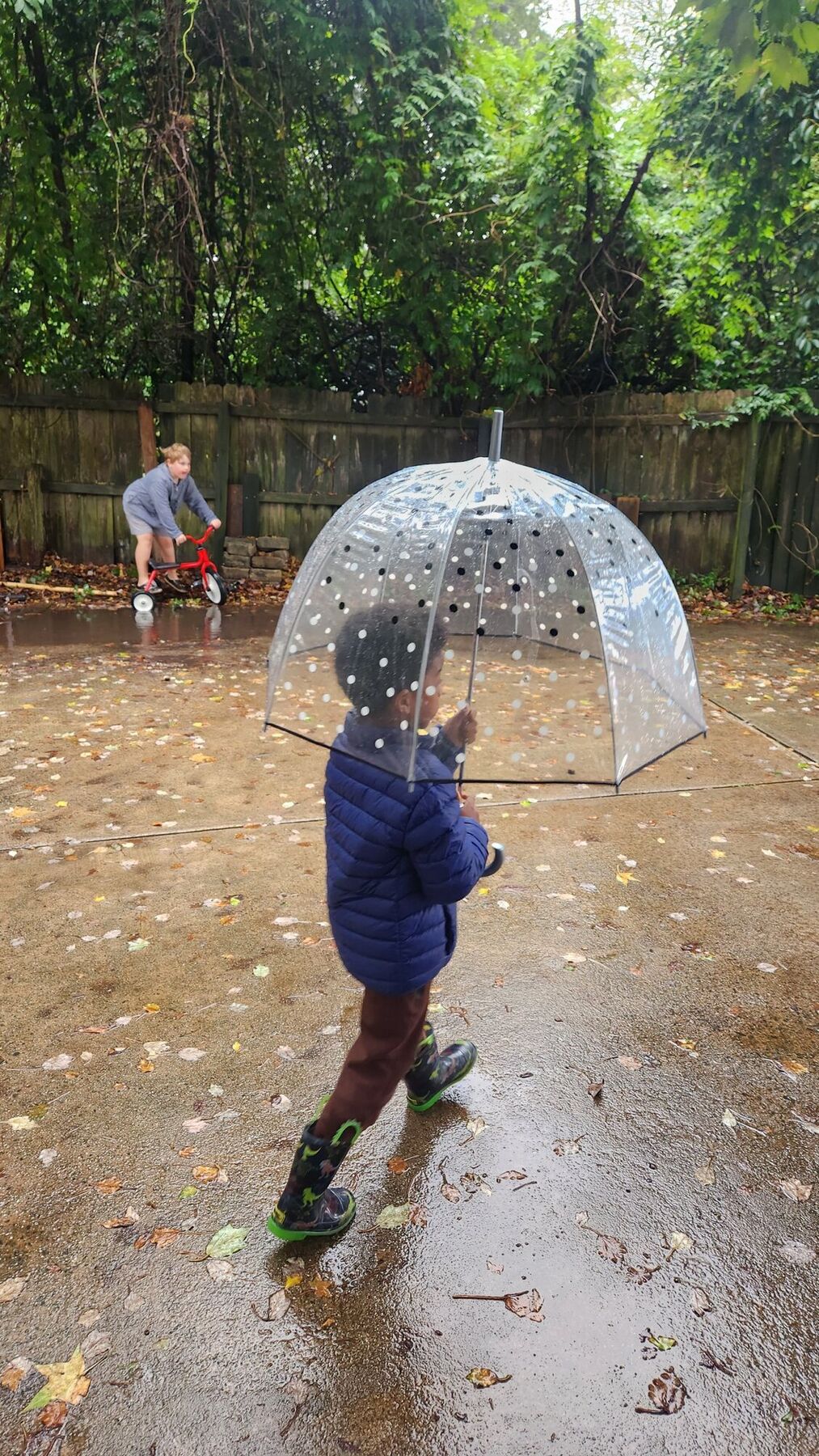
- The youngest. Based in the play yard, with indoor classroom space: open play, field trips, forest days.
- Saplings
- When kids start to think ahead and try offerings in the schoolhouse. Also based in the play yard, with field trips and park days.
- Canopy
- The middle years, based in the schoolhouse. Kids make their own schedules, commit to offerings, develop projects, and grow closer to their peers.
- Acorns
- The teens, also in the schoolhouse. Personal interest projects, writing workshops, civics, and test prep for those who want it.
How we treat each other
Consent comes first. Kids decide where their bodies go and how they spend their time, and they grow up knowing that an enthusiastic yes matters: their own, and other people’s.
When there’s a conflict, kids work it through directly, with a facilitator’s help when they need it. We practice conscious communication: saying what happened, how it felt and what you need, and listening while the other person does the same.
Each group makes agreements about how people treat each other, and kids help shape them. For the youngest it starts simple: say stop, and if that isn’t respected, walk away and get a facilitator.
Older kids also study how the wider world works, including why it treats some people unfairly, and talk those questions through together in Connection Circle and in their offerings.